20 Things I’ve Learned This Year

It’s been a hectic year for me, to say the least. Between internships, studying for the personal training certification, client evaluations, and training clients, it’s safe to say that I’ve kept busy. With constant development of my theories and education, my knowledge towards the mind, body, and overall quality of life has grown exponentially. There are too many people to thank that have helped me develop my personal training beliefs and theories. So, it just feels fitting to discuss 20 things that I’ve learned this past year to celebrate my 20th birthday! Let’s get it started…

1) Somatics has remodeled all my prior beliefs on what individuals should do for a warm-up. Consisting of several ground-based movements, Somatics does what others do not. It’s ability to connect the mind to the body is the main reason as to why it’s the self-centered part of my warm-ups. Somatics teaches tender, tight, painful muscles how to relax on their own through slow, controlled movements.

2) Are “healthy” whole grains really that healthy for us? I recently began reading Wheat Belly by William Davis, MD and my eyes have been glued to it since. You would never think something deemed healthy on virtually every single food product’s label we see could actually be bad for you. Davis’ research makes you second-guess this however. After starting my own “wheat-free” experiment last week, I feel more energized already. Whether it is a placebo effect or not, time will be the judge in determining how my personal study works.

3) Day in and day out, I see people throughout the gym performing exercises with God-awful form. It’s quite possibly the most frustrating thing to me personally. My next lesson learned this past year is, building strength on top of dysfunction is a recipe for disaster. Gray Cook, MSPT is a big advocate on this practice. Correcting dysfunction is an important aspect to me in the gym because it prevents pain and aggrevating setbacks. Figure out what’s wrong, correct it, and build stronger from there!

4) Not everybody is the same, specialization is key. I’m not going to train a 65 year old grandmother with nagging joints the same way I train a 19 year old baseball player. Prior injuries, strength levels, postural alignment and experience are a few of the factors I use to develop my programs.

5) Ground-based exercises should be mastered by beginners before anything else, in my opinion. Glute bridges, Cook hip lifts, deadbugs, planks, bird dogs, and kettlebell pullovers are a handful of the various exercises I prescribe to my novice clients. I’m a big fan of this because developing a baseline strength level while preventing injury is my man objective with new gym-goers.

6) The right regression is the best progression. I believe it’s Tony Gentilcore who brought this phrase to my attention, but don’t quote me on that! Sometimes, exercises are plain and simply too difficult to execute with good form. When this is the case, dialing down the difficulty a notch is important, while keeping it intense for the client. Once they establish good form and strength gains with the regression, slow progressions may occur.

7) From my personal experiences, kettlebell conditioning gives you the best bang for your buck when under time constraints. If I have a client for an hour session, I’m not going to waste 15 minutes of that hour having them run on a treadmill. Try performing either a kettlebell swing or snatch for 5 minutes. If you aren’t gassed after that, something’s wrong.

8) Mastering your breath is the key to maximal strength. Developing abdominal pressure through diaphragm breathing is optimal to lower back health. The tighter we could get, the more tension we create, the stronger we will be.

9) Nutrition is a major role in developing our overall health. As of late, fitness enthusiasts and nutrition junkies have been more aware about the quality of food rather than the quantity. Organic, grass-fed, and gluten free labels are popping up on what feels like every food product down every aisle of the grocery store. I don’t care what you say, I’d rather someone eat tons of fruits and vegetables than smaller portions of gluten free waffles, cakes, etc. Just because it has a label like that doesn’t mean it’s healthier! Brian St. Pierre, CISSN believes that if you couldn’t hunt, fish, pluck, grow, or ferment/culture the food, you probably shouldn’t be putting it into your body.

10) Developing relationships with your clients is important to keeping my job fun. I’ve seen it time and time again where personal trainers just stand there and count reps, or even stare blankly into their phones. These people spend their hard earned money to have the opportunity to work with me, so my goal is to make their time worthwhile. Are you going to be best friends with every single one of your clients? No, but it doesn’t hurt to communicate and be supportive of their goals both inside and out of the gym.

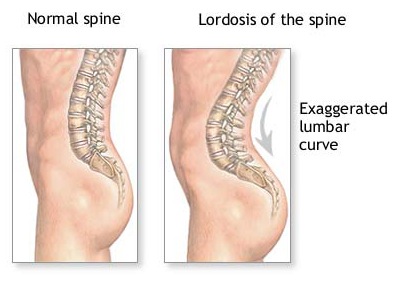
11) Proper posture alignment is important for optimal lower back health. From past experience, because I lived in extension, my lower back would always be an issue to my weight room success. I could never figure out why, was it my hamstrings? My back flexibility? My massive, non-existent biceps? No, it was the way I stood all day! My anterior pelvic tilt (“Donald Duck” posture) forced my lumbar erectors (lower back muscles) into constant contraction. Muscle contraction leads to fatigue, leading to soreness, chronic fatigue, and eventually pain. So next time you look in a mirror, stand sideways and be the judge of your spine alignment yourself.
12) The issue with caring for pain in today’s world is, most people tend to look at a piece of the puzzle, rather than the actual puzzle itself. What this means is, painful areas are looked at in isolation rather than their movement patterns. An example of this could be seen through Gray Cook and Brett Jones describing the hip joint being a bad “neighbor,” to the knee and back. Through this, they elaborate on most pain occurring in these joints is due to dysfunction in hip movements. The key is to figure out what you’re struggling with and get batter at it!

13) Regardless of how much my theories on fitness evolve in the future, there will always be one thing that remains concrete. Reading is the most powerful tool one can own, in my opinion. I can honestly say that due to the surplus of resources out there for fitness news and research, I am the personal trainer I am today. The greatest thing about reading is, new material is developed virtually every single day, allowing me to keep my mind thinking and expand my horizon.

14) Fancy equipment isn’t necessary for a good workout. Does it look nice? Sure. Is it effective? For the most part. Is it a necessity? Nope. There’s no need to have clients squatting on BOSU balls if they can’t squat their own bodyweight the proper way. Remember, start from scratch. Build the ground floor and work your way up.

15) The best pre-workout is black coffee, unsweetened. All these pre-workouts today are loaded with chemicals that may not affect your well being now, but could down the road. My general rule of thumb is, if you cannot read the ingredients on the label, you probably shouldn’t be putting them in your body. Coffee, without all the sweeteners and whatnot, gives you the kick you need naturally.

16) Everybody has a theory, you have to figure out what works best for you. A Division I strength coach isn’t going to have the same philosophies as a Bally’s Yoga instructor. Some of their beliefs might be similar, but their result orientation differs. Personally, I am a big fan of kettlebells. Is every exercise I have my clients perform done with a kettlebell? No, but I believe their usage is an extremely effective way to achieve our goals. Figure out what works best for you!

17) Developing total body tension should be learned before heavy compound movements. Tightness throughout the body is important to strength gains as well as performing pain-free exercises. Imagine this continuum. There is a sack of bricks and a sack of feathers. When squatting, which one would you rather be? We want to develop tension hard like the bag of bricks. Otherwise, we cannot control to weight and this is when injuries and other issues arise. Learn how to activate your muscles

18) CrossFit, in my opinion, is an amazing concept. I really do like it a lot. However, there are a few flaws that prevent me from being a “CrossFitter” myself. One of the huge problems that most people have with CrossFit is the lack of proper form in certain facilities. Of course, not every single gym is guilty of this, but the culprits are responsible for giving CrossFit the bad rep. Another issue is the high-rep work of the Olympic lifts (snatch and clean & jerk). These are such complex and difficult movements to master where they shouldn’t be performed for tons of volume. Eventually, form breaks down and things head down south from there. Overall however, it’s a great way to get friends and family off the couch and creates unity and companionship through exercise. Doesn’t get much better than that!

19) Similarly to the regressions I spoke about before, the proper cue could clean up best form. Considering how every individual is unique, not every single cue will be digested the same way. It is my job to experiment with the cues I give in order to get my clients into the proper position or movement pattern.

20) To the general population, both internal and external strength development is a marathon rather than a sprint. Unlike an athlete, where there’s deadlines due to in-season/off-season schedules, there’s no need to rush a client through phases. I don’t progress my clients until they’ve mastered the task at hand, which prevents setbacks with tweaks and straights during poorly executed exercises. Strength is a lifelong road where being content with the person you are should never occur. Physically, emotionally, spiritually, the list goes on. There is, and always will be, a way to better develop all the aspects of your life. Having an open mind and a strong work ethic are two traits that tag along this path.

So, these are the twenty things that popped into my head first. I’ve learned so many different things this year through so many different people, it was hard to even know where to start. My goal for each and every day I wake up, is to expand my education further than it was the prior day. Whether it’s fitness, nutrition, psychology, philosophy, or any other subject, find out what your interest is and fall in love with it. There’s my advice for the day, now go out and become a stronger person today!

(P.S. There will be a 21 things I’ve learned this year next year!)

Understanding Rib Alignment and it’s Relationship with Lower Back Pain

Throughout the fitness industry today, one of the biggest assessments used comes from simply raising the clients hands overhead. As simple as it sounds, it is, in my opinion, the most difficult assessment to correct. Now, what is this assessment telling me, you may ask. Rib alignment, which basically determines our overhead mobility, anterior core strength, and overall posture.

Generally speaking, in terms of the lower back, there are three common postures that are seen today. They include spinal extension, spinal flexion, and optimal/recommended spinal posture. Without getting too complicated, extension and flexion are the postures we want to correct in order to get back to optimal alignment.

From left to right, normal posture, flexion, and extension.

So, what does this have to do with our rib position?

Typically, people that already live in extension are unaware of their rib positioning, which leads to excessive rib flare. This causes tons of pressure on the lumbar spine under heavy load, which can lead to herniated discs, spondylolisthesis, vertebrae fractures, etc.. (1) Another issue which occurs in extension patterns is, the lumbar erector muscles of the lower back are always “turned on”. Because of this, the muscles can never relax, eventually fatiguing and causing pain. (2)

Here’s an example of excessive extension, notice the position of the rib cage and the butt.

Extension and flexion patterns also prevent us from reaching our maximal force production levels. This could occur from the pelvis, ribcage, or head regions. (3) If we have a faulty setup at any one of these positions, there is a loss of stability which leads to energy leaks and less than optimal strength. Let’s take a look at the head, for example.

Here’s an explaination from Todd Bumgardner, MS from his article “4 Weightlifting Myths, Destroyed” on T-Nation.

“Let’s start by keeping something important in mind – the majority of the cervical spine is designed/adapted for stability. Most of the mobility is in the first two vertebrae, not the inferior five. Creating false stability by jamming the articular structures of the spine together de-centrates the cervical spine and reflexively inhibits the muscles of the inner core (diaphragm, pelvic floor, multifidi, transverse abdominus).

If these muscles don’t fire first, the recruitment of the outer-core (abdominals, spinal erectors, glutes, lats) is skewed and a neurological inhibition cascade follows. Long story short, with your neck extended your brain thinks your spine isn’t stable, or safe, and it limits neural drive to outer-core and prime movers.” (4)

So as you can see, false positioning of certain body parts leads to unwanted stability at others. For false rib positioning, the anterior core can’t fire properly, causing the lumbar erectors to pick up the slack. As I stated earlier, the potential for injury is much greater in this position rather than with proper bracing techniques.

Now that we understand what rib flare is, and the negative side effects that inhibit our performance, how do we correct it?

The cue I pound into all my clients heads that live in extension is a simple one, “bring the ribcage down”. I teach this by having them lay on their backs on the floor, and taking a nice deep breath into their chest. Next, I have them realize that as they breathe in that their ribcage rises as their chest. As they exhales, my cue is to have them driving the ribcage and belly into the ground. This allows the ribcage to get into proper position and also limits the excessive arch in the lower back. I teach this on the floor because, if we were to do it standing, it is much easier to fall into a kyphotic (hunchback) posture without even realizing it. Laying supine on the floor, in order to fall into a kyphotic position, your head and neck would have to come off the floor, which the client would be much more cognizant of.

An example of optimal rib positioning, avoids arching the lower back by keeping the ribs “down” through bracing.

For an exercise standpoint, what I prefer to do with my clients is hammer different drills on the floor. Various breathing patterns, core stability, and core strength exercises are implemented until they are mastered. From there, I progress my clients to tall-kneeling, and half-kneeling variations of exercises, which force the core and glutes to fire in order to perform the movement properly. These progressions give a sense of recognition that allow the person to understand what properly alignment should be not only for the movement being performed, but for all exercises. Eventually, we perform different core movements on our feel like Pallof presses and anti-rotation chops to really hammer the abdominals and obliques.

Along with the core, I put a huge emphasis on glute exercises as well. Glute bridges, pullthroughs, and split squat variations are some of the primary movements I use to teach glute activation and strength. Mini band walks as well as side-lying hip abductions are my two favorite movements that force the glute medius to fire when executed properly.

Combined, strengthening the glutes and anterior core will allow us to get back into an idea posture. If we can avoid improper posture, we can avoid faulty movement patterns, which lead to nagging and frustrating injuries. Butt tight, ribs down, core tight. As simple as it sounds, these three cues combined will lead to new strength levels never seen before in the gym!

References

1.) Gentilcore, Tony. “Simple Squat Fix: “Owning” Your Rib Position.” Tony Gentilcore. N.p., 4 Oct. 2013. Web. 28 Oct. 2013. <http://www.tonygentilcore.com/blog/simple-squat-fix-owning-rib-position/&gt;.

2.) Hanna, Thomas. Somatics: Reawakening the Mind’s Control of Movement, Flexibility, and Health. Reading, MA: Addison-Wesley, 1988. Print.

3.) Starrett, Kelly, and Glen Cordoza. “Midline Stabilization and Organization (Spinal Mechanics).” Becoming a Spple Leopard: The Ultimate Guide to Resolving Pain, Preventing Injury, and Optimizing Athletic Performance. Las Vegas: Victory Belt Pub., 2013. 52-54. Print.

4.) Bumgardner, Todd. “4 Weightlifting Myths Destroyed.” Testosterone Nation. N.p., 5 June 2013. Web. 28 Oct. 2013. <http://www.t-nation.com/free_online_article/most_recent/4_weightlifting_myths_destroyed&gt;.

From the Ground Up: Training the Untrained Individual (Part 1)

As a personal trainer, the toughest part of my job is formulating a workout program to allow my clients to achieve the goals they want to reach. Weight loss, muscle gain, performance, a better looking body. These are all the results that people have requested to me on what feels like an everyday basis. This is great and all, but in order to get to these goals, there’s something missing in 99.9% of these people. And the missing link to the equation is always strength.

  • Can’t have adequate weight loss without developing our strength levels.
  • Can’t gain muscle without lifting some heavy ass weight!
  • Can’t become a better athlete without being able to develop and transfer power, which comes from strength and the velocity at which a force is produced.
  • Can’t develop a nice body without doing anything. 6 hours of television a day just isn’t going to cut it!

As you can see from the bullet points, everything always comes back to strength.

Now the question becomes, how do we develop strength? Simple! Compound exercises like the squat and deadlift develop strength and mass like no others.

“But wait, I’ve never done either of these before.”

Don’t worry, I’m well aware. We’re still quite some time away from performing either of these with a weight load. So…if strength comes from total body exercises, and we aren’t ready to perform these exercises, what do we do?

As I’ve stated before, we have to build from the ground up! Figuratively and literally. You can’t build the tallest building in the world without a stable base. Same guidelines go for our body, we aren’t going to squat 225 properly for reps when we can’t even do a bodyweight squat correctly.

Whenever I train a new client, the majority of the workout comes from a variety of exercises on the floor. I do this because I want them to get a feel for proper spine alignment for the different lifts that will be performed in the future. In order to get this feel, I provide cues which give them an understanding as to why rib positioning and core stability are crucial for keeping the lower back healthy. This is why, in my opinion, mastering the movement patterns we perform on the floor are the first step in the right direction to reaching our goals in the gym.

As unfancy as it is, this is all the equipment you need to start!

With everything becoming all “functional” in the fitness industry, physioballs, BOSU balls, tubing, resistance bands, and all other equipment seen in gyms today have taken over the spotlight. Sure, this stuff is nice and all, but you can’t get to the 3rd floor of a building without entering through the lobby. The first thing we must do is regress every exercise back to its most basic version and master it, before we even think of progressing it. It has been said plenty of times in the fitness business, “the right regression is the best progression”. What this means is, we’ll get a much greater benefit from mastering an “easier”* version of the exercise rather than butchering the tougher variation presented.

*I put easier in quotations because regardless of the exercise, if you’re doing it properly with enough weight, it’s going to kick your ass!

So, in order to develop a stable structure for our building, the first thing I hammer with my clients is the plank. Core stability is going to be a huge factor on hip mobility and overall quality of the lower back. I can’t tell you how many people’s lower backs are killing them simply because anterior core strength is non-existant. This effects our posture, causing an extended posture of the spine (anterior pelvic tilt) which prevents the muscles of the lower back from truly ever relaxing. Just by cleaning up this one issue, we can naturally clean up this lordotic posture in order to keep that lumbar spine from screaming at us every time we pick something up.

The reason I love the plank is because it is an isometric muscle contraction. What this means is, the muscle being worked contracts without lengthening (eccentric contraction) or shortening (concentric contraction). The total body tension we create in the plank carries over to every other exercise we execute.

Just think about it, would you rather have muscles that are nice and relaxed or firing as hard as they can with 500 pounds on your back performing a squat? Easy answer, fire those muscles as hard as possible to prevent yourself from collapsing under the weight. That doesn’t sound too pleasant now does it?

(First time speaking in front of camera, don’t judge!)

Just breaking it down a little further, we must make sure our ribs do not “flare up” as we bring our hands overhead. If this does occur, it tells me that the anterior core is not properly firing to keep an ideal rib position. This causes us to perform in an extended posture where the muscles of the lumbar spine are basically always “turned on”. Because these muscles don’t know what it feels like to be fully relaxed, they eventually fatigue, causing one of the possibilities of lower back pain.

Along with keeping the ribs down as we set up, the other cues I give during the plank are…

  • Set up the hands in a prayer position directly below the nose.
  • Create a double chin to keep our cervical spine in a neutral position.
  • Brace the core as hard as you can, imagine a punch is being thrown at your stomach and you want to avoid getting the air knocked out of you.
  • Walk one leg out at a time, making sure the glutes and hamstrings are as tight as they can possibly get.
  • Take nice deep breaths in through the belly rather than the chest to keep our spine in alignment.
  • Ribs must stay down!!!! This is the biggest thing people have a tough time grasping, it just takes time and getting comfortable with the way your body works.

I make sure the plank is a part of all of my client’s programs. I tend to use it as a warmup exercise, simply to get those muscles firing before we get into more complex movements. I usually assign it as the first thing we do on the day. An example of this would be…

A1) Plank 4 x 10 – 15 breaths
A2) Miniband Walk 4 x 20 yards
A3) Glute Bridge w/ Foam Roller 4 x 10 – 12 reps

So there you have it, that’s the gist of how I create the ground level floor with all of my clients to building their skyscraper. As I constantly stress, there is nothing more important than developing a functional, strong, foundation when it comes to working out. Give the plank a shot and start to understand why it is so important!

My Pet Peeves with Strength & Conditioning Programs

Strength and Conditioning has been a rapidly growing field in the fitness industry since the 80’s and 90’s. Nowadays, virtually every single college and professional athletics program have a strength and conditioning regimen implemented. Now, this seems great and all, but there are some issues I have with the S&C field.

Of course, not every single coach is guilty of these flaws, but from my personal experiences, these are the things that bother me most.

1) Lack of Specificity

Picture this situation: a 6’5″ pitcher and a 5’8″ second baseman are given the exact same workout. The 5’8″ guy excels with this program, while the 6’5″ pitcher struggles through it and eventually hurts himself. From a general standpoint, why is this?

Every single body on this planet is different, in one way or another. Our biomechanical makeup is unique, regardless of the person. Therefore, we should train the same way, with specificity.

Let’s say that in the two baseball player’s situations, their programs asked for them to complete 5 sets of 2 heavy deadlifts from a deficit platform. The 5’8″ guy has long arms to compliment his short legs, as well as adequate hip mobility, so this could be an ideal exercise for him. On the other side of the spectrum, the guy that is 6’5″ has a much tougher time getting into the bottom position of the deadlift due to a combination of longer lower extremities and a restriction of hip flexion. Therefore, this is an exercise he should try to avoid. As you can see, not every exercise works well with each individual. The challenge is to find lifts the athlete could perform with good form while also benefitting from a strength and athletic performance standpoint.

I’m going to use myself as an example. I am a much better deadlifter than I am squatter. My best deadlift is 450 pounds while my squat is only a shade over 300. Why?

Well, because I’m 6’3″, it requires a lot more work production to get to depth in the squat. The bar has to travel a longer distance due to my long limbs compared to someone shorter than me whose center of gravity is closer to the floor. The deadlift doesn’t have much of an eccentric phase to the lift, so this already requires less work to be done. Along with this, I have pretty long arms, which allows me to get down into position without requiring a great amount of hip flexion. Because I have longer than average arms, producing maximal tension in the deadlift is easier for me than it is in the squat because of the decreased amount of movement.

So, the moral of the story is: biomechanics matter!

2.) Quantity Over Quality

I couldn’t tell you how many times I’ve seen this happen in a weight room or in a video. An athlete steps up to a bar with a weight load on it that they shouldn’t even be sniffing, let alone attempting to lift. There’s numerous videos on YouTube of college programs (even top Division I programs) loading bars up with weight just to follow up with crappy form with the lift they’re executing. All it takes is one shitty rep of an exercise to screw yourself up structurally for good.

3.) Time Constraints

In a college weight room, time restrictions play a big factor in workout quality. A strength coach could have a new team every hour on the dot during his work day. Now, this obviously isn’t his fault, but time efficiency becomes an important task to accomplish. When time isn’t on your side, chances are you’re rushing through your workout. Optimal rest = optimal strength = optimal performance.

Along with rest, I like to take my time before workouts with soft tissue work as well as different mobility exercises. I can us up to an hour alone on certain days with these different activation movements and massage techniques. So obviously, for me personally, an hour to squeeze all this in wouldn’t be ideal for me. It might be for somebody else, all comes back to the unique traits of each human body.

4.) Getting Too Fancy

I am a firm believer in mastering the basics when it comes to working out. As I’ve stated before, there is so much information out there now, where it can become really confusing as to where to start and where/when to progress. The variations of exercises are endless today thanks to all the new “hi-tech” equipment. However, are all these variations beneficial. Well…

Should you squat on a BOSU ball without adequate hip and ankle mobility? No.
Should you bench press against band resistance when you are an overhead throwing athlete with poor scapular stability? No.
Should you plank on a stability ball when you don’t have enough core strength to maintain proper posture on the stable floor? No.

All of these exercises could be beneficial, we just need to find an appropriate variation!

Of course, as I’ve stated earlier, not every single strength coach is guilty of these flaws. There are plenty of great strength coaches out there that get a bad reputation because of the crappy ones. Just like any other industry, there’s going to be individuals better at their role than others. That’s just how it is, and this concludes my rant of the flaws bad strength coaches have attained.

And a side note, Eric Cressey dropped his new book/training resource last night. I can’t wait to buy my copy of the High Performance Handbook later on tonight and take my game to the next level!

Free Write Friday: Bareburger, Breathing, and Blog Ideas for the Future

So we’re winding down another hectic week here at Queens College. As the weeks go on, it seems like they just get busier and busier around here. 6:30 AM shifts sitting here in the fitness center have almost become second nature to me (which is a good thing!). As I sit here on a quiet Friday morning, let me take this time to breakdown some of the thoughts that have come to my mind!

First off, I finally got around to trying a food joint I’ve been dying to try. There’s two in my neighborhood alone and I just haven’t put the effort in to try either of them. From my understanding, it’s only found within New York (besides one that found it’s way in Jersey). Well, that sucks for any of you reading outside of the NYC area. Bareburger definitely worked it’s way onto my list of food spots that I visit frequently, it’s that good!

I still remain skeptical of it’s claims on being completely organic. With all today’s companies taking full advantage of the “gluten free” and “no GMO added” trends, who wouldn’t slap a label onto their product for some extra profit? Regardless, based on the quality of the meat alone, you can tell you’re getting food better than the majority, if not all, of restaurant and food chains.

The variety that this place provides is unbelievable. Beef, grilled chicken, lamb, wild boar, elk, bison, and ostrich are all different options at Bareburger. I’m sure I’m missing a meat or two on that list as well. Then you pick from a variety of buns, veggies, numerous bacons, cheese, and a million different sauces. The possibilities are endless.

I went with their Country Bacon burger yesterday, which consisted of cheddar cheese, country bacon, lettuce, tomatoes, red onions, and mayo on a bison burger. That thing was out of this world. If you’re in the area and want to try out a good-quality burger, then make sure you check out Bareburger!

Another thing just as badass as bison burgers is the fact Eric Cressey is dropping a new product next week. The High Performance Handbook is the title, and I cannot wait to get my hands on it. I’m not 100% sure if there will be, but I definitely want a hardcopy of this book for my personal library.

As preparation for this release, Cressey has been dropping knowledge bombs left and right in free video content. These videos deal with topics like cranky shoulders, breathing exercises, and proper rib position during lifts. Here is the link to the two videos thus far: http://highperformancehandbook.com/helpful-videos/best-posture/

Most of you already know that I am a huge advocate of the way we breathe. Our breath is everything, it plain and simply allows us to live. Without oxygen, I wouldn’t be writing this article and you wouldn’t be reading it.

Diaphragmatic (belly) breathing can allow us to relax or pull the weight of the world off the ground. As you can see, two complete opposite ends of the spectrum. When breathing through our diaphragm, we can inhale maximal oxygen while taking our normal breath. This allows heart rate to decrease, allowing us to relax. With yoga and meditation, breathing is crucial in order to “turn off” the outside world.

Now at the other side of the continuum, belly breathing can also help us move heavy weight! As we breathe in nice and deep with optimal core contraction, we create a brace internally to protect our spine. I like to have my clients picture themselves as a package. Their spine acts as a fragile object, and their core is the bubble wrap that prevents the object from breaking. If we ignore our breath, we cannot achieve maximal tightness. Without maximal tightness, the bubble wrap cannot work as efficiently. So the moral of the story is, your breath is your key to lifting heavy ass weight!

Now that I spend my Tuesday, Thursday, and Friday mornings writing for this blog, I’m excited to share my future plans with my readers in terms of blog content. This idea clicked into my head recently as to how we act similarly to a skyscraper.

“Is this kid on drugs? How do we act like skyscrapers?”

Hear me out on this, it would be impossible for the Empire State Building to stand if it were made out of straw. The foundation just wouldn’t be able to support the height of the building. Our bodies work in a similar fashion when it comes to lifting. We cannot get big and strong if we have a weak foundation. For me, core stability, hip mobility, and lower body strength are the keys to developing strength. We can’t deadlift 400 pounds without this foundation. Otherwise, expect to destroy your back or shit a kidney out in the process. Therefore, we have to start from the “lobby” of our “building”.

And this, ladies and gentlemen, is the beginning of, “From the Ground Up”. Expect a blog post every Thuesday on a new exercise to construct the building we want to make ourselves. Regardless of our goals, a good foundation is important. For gym strength, athletics, and overall quality of life. My intent is to get you to that level, and I’ll do my best to make it happen!

Kettlebell Swing: Why is it Vital?

As I warmup here on this cold Friday morning, I figure I should do a write-up on the most important exercise (in my opinion) I perform during my warmup before I lift. Everyday I workout, I make sure I perform these before the actual program begins. Drumroll please….the kettlebell swing, as you can see from the title.

“Wait, what? I don’t even know what a kettlebell is.” Well, it’s time to learn because this one missing link could be the difference in plateaus and strength gains in the weight room.

So why is the KB swing an important exercise to have in our arsenal?

First, it is a ballistic exercise. Andrew Read, Master RKC, likes to describe a ballistic movement as a bullet, where these is one movement to acceleration then it is coasting after being fired (1). This shows that the swing is an explosive total body exercise for burning off fat, building muscle and a pair of balls. There are multiple workouts out there that not only challenge physical strength, but mental strength as well. That’s something to discuss later though!

Second, swings are a lot more lower back friendly that other posterior chain exercises. The shear force placed on spinal vertebrae is much great on movements like the deadlift (2). Studies estimate that approximately 80% of the population will experience a back problem at some time in the lives (3). Our goal is not to become another statistic with a nagging back pain, which not only halts gym progress, but everyday lift experiences as well.

Finally, from personal experience, I feel like there is no other movement that provides the benefits the swing does, from a warmup perspective. Swings get the heartbeat up, forcing body temperature to increase, forcing us to break a sweat. They also require crazy muscle activation, especially from the abdominals and glutes. Try it for yourself, shoot for 10-15 swings and tell me you’re ass and core isn’t on fire. I’ll call BS everytime. Another reason I’m a big fan of the swing is it allows me to practice my hip hinge as well as breathing patterns. The hip hinge translates over to the deadlift, which is easily the most important posterior chain exercise for athletes. Of course, the effective tension and breathing takes time to master, it just takes a lot of practice

So now that we know why we swing, the next thing to learn is how do we swing?

I like to break the swing down into three phases, the acceleration phase, plank phase, and descent phase.

  • Acceleration Phase

Learning how to be quick with the kettlebell is going to be crucial. The faster we move the weight, the more powerful we become. The more powerful we get, the more weight we can move, thus gaining strength. Simple right?

However, speed is great and all, but control of the kettlebell is just as important. Being able to swing the bell to chest height while maintaining stability of the core and glute activation is difficult, I know from experience. As we get better at it (through practice!) the easier and more fluid the movement becomes.

Some of the cues I like to give to my clients are…
– Squeeze the stomach as hard as you can, pretending you’re about to get punched by a boxer.
– Pop the hips through and squeeze the butt.
– The arms must stay nice and long throughout the movement.

Plank Phase

In my opinion, the transition from the acceleration phase to the plank phase is what makes you, or breaks you during the swing. The plank phase’s name speaks for itself. Essentially, it is a standing plank when the bell gets to chest height. Total body tension during a plank is absolutely vital, which makes it vital in the swing as well. People claim they are able to hold a plank for 5 minutes, however, their form is most likely to be absolute garbage. But that’s a topic for another day!

Some of the cues I give to my clients are…
– Tighten up every muscle in the body. If I were to push you, you wouldn’t budge.
– Exhale hard, but short at the top position. You should sound like a cobra (tsssss…) This prevents us from completely exhaling and losing the brace our core produces.
– Don’t let the bell get higher than the chest. Beginners like to fall into an anterior pelvic tilt, which forces the muscles of the lumbar spine (lower back) to work overtime. Let’s try to avoid this!!!

Deceleration Phase

The deceleration phase is where control becomes a factor. Once we “plank” at the top position, we want to of “pulling” the bell down rather than the bell leading the motion. A key idea to remember is, you control the kettlebell, it doesn’t control you.

This phase is also what differentiates the swing as a hip hinge pattern rather than a squat. Most people tend to squat down with the bell in the bottom position. We want to avoid this because the kettlebell has to travel a longer distance. Short and quick are two works that should be in your mind throughout the exercise.

Some of the cues I give my clients are…
– “Attack the zipper”, this will keep the bell nice and tight to the body.
– Spread the groin, the bell is going to swing to this area of the body and this also prevents the knees from caving in.
– Continue to keep the core night and tight from the beginning until the end of the movement.

Well, there you have it on technique. Of course, this is a lot of information being thrown at you at once. For someone who has never executed the movement before, it’s going to take time. You don’t just learn this overnight. As we progress, expect to see your strength and endurance levels shoot through the roof!

How do we go about working the swing into our program? I would start light and really focus on being explosive with the pattern. Anywhere between 2 and 6 sets of 8-15 reps would be a good starting point in my opinion. As we get better at the exercise, there are various workouts and challenges we could attempt that are centered around the KB swing. Recently, Dan John posted a workout on T-Nation (www.t-nation.com) called the “10,000 Swing Kettlebell Workout”. It’s 20 workouts, so if you do the math, that’s 500 swings per workouts. If you’re experience with the kettlebell, ambitious, and looking for a challenge, give this workout a shot! (Here’s the workout http://www.t-nation.com/workouts/10000-swing-kettlebell-workout)

Now go out there and get to swingin’!

← Back

Thank you for your response. ✨

References:

1. http://breakingmuscle.com/kettlebells/the-kettlebell-swing-why-its-the-perfect-exercise

2. Same as reference 1

3. Vallfors B. Acute, Subacute and Chronic Low Back Pain: Clinical Symptoms, Absenteeism and Working Environment. Scan J Rehab Med Suppl 1985; 11: 1-98.

Do What YOU Want to Do

What’s up everyone, me again! This time I come back to you as a certified personal trainer through the NSCA (NSCA-CPT). I could honestly say that outside of all the studying I have done to prepare for this test, I couldn’t have done it without the support of my friends and family. There has never been a more satisfying feeling than receiving that email informing me I was officially a trainer.

Anyway…

Two things that have really caught my attention as of late are philosophy and psychology. Ever since I discovered the holistic approaches Somatics teaches during my internship at Matrix, internal well-being has become a major interest for me. And let’s face it, a grasp on our mind and health become a premium when trying to develop that external body we all want.

Over the past couple years, the fitness industry has taken off like it never has before. New research comes out every single day it feels like, which constantly remodels the “fads” we see in the gym today. Kettlebells, functional training, Crossfit, MMA training, boot camps, the list goes on and on. The resources about exercise at our fingertips have basically become endless.

So, what’s the flaw behind this?

Well, everyday I walk into the gym I work at and am amazed at all the personal trainers that hire themselves overnight. Seriously. I’ve seen people here try to coach things like the hip abduction machine and stationary bike. Okay maybe, that’s not true, but you get the point. Usually it’s two guys together, one seems to have some gym experience while the other one looks like it’s the first time he has ever stepped foot into a weight room.

In all honesty, I like this. I like seeing people try to help one another in the gym. Hell, I wouldn’t be a personal trainer without all the guys that have taught and helped me along the way. But, I am a firm believer that you can only preach what you practice. I’m not going to sit here and type pretending I know everything about anything, but I make sure that I use the same concepts with my clients that I use within my own workouts. Some of the “trainers” I see in here try to coach back squats with their friends meanwhile they can’t execute a single proper squat with nothing but their own bodyweight, let alone a bar with some plates on it. This really grinds my gears, but enough with this rant. Let’s get down to business.

Fitness itself, is an art in my eyes. There are no written laws or rules when it comes to working out.

You want to join Crossfit? Do it.
You want to run a marathon? Do it.
You want to work strictly with kettlebells? Do it.

No one says you can’t do any of these things (of course there’s exceptions, you’re not going to be a world class marathon runner and be able to squat 1,000 pounds).

Crossfit, for example, gets bashed a lot and tends to be an organization trainers advise to avoid. Personally, I like Crossfit. Yes, there may not be much science behind their methods, and some of their principles are questionable, but they also provide benefits others cannot. Camaraderie and a family-like atmosphere are two of the beneficial factors Crossfit brings to the table. What’s better than getting your ass kicked than getting your ass kicked while motivating and being motivated by your friends around you?! Sounds like a win-win to me!

reebok_crossfit_logo_5900x1175

Exercise is strictly a results-orientated field. If you’re a salesman and can’t sell products, you’re broke. If you’re a doctor and can’t cure your patients, you’re a quack. If you aren’t dedicated with your workouts and expect to see results, you’re dead wrong. Just like anything we do in life, if you don’t give complete effort, you aren’t going to achieve your optimal potential. Plain and simple.

So what am I saying? Experiment. Become your own lab rat in the gym. There are many articles online about certain exercises and their benefits, but they haven’t come from your own experiences! Not everyone’s body works the same way, therefore everyone is going to have some type of variety within their workouts. With that in mind, here are a few things to keep in mind when building workouts in the gym.

  • Figure out the environment, you’re not going to deadlift 800 pounds at Planet Fitness without that stupid alarm going off and getting kicked out. Find a gym that fits your needs and make it your second home!
  • Choose exercises that you enjoy. This doesn’t mean sitting on a stationary bike watching Netflix on an iPad with an extra large iced coffee from Dunkin Donuts with God knows how many Splenda packets inside of it. Pick challenging exercises with multiple progressions/regressions that you love to do. Below is an example of progressions we could perform with the squat, master each one before moving on!Bodyweight squat -> Kettlebell Goblet squat -> Barbell squat -> Barbell squat with chains or resistance bands attached
  • Time management is an important key when in the gym. If you only have 45 minutes to workout, don’t spend half an hour foam rolling and stretching. If you have the time luxury, then take advantage on the soft tissue work and getting a good warmup in. Just remember that managing your time efficiently is huge!

If you keep these three things in mind, you should have no problem producing successful workouts consistently in the gym. At the end of the day, it all comes down to you. Your work ethic and motivation will determine everything. The goal is to create the strongest version of yourself, a phrase made famous by Elliott Hulse and it’s one I stand by, and will always stand by. There are many paths that lead to this final destination, you just have to figure out which route works best for you!

← Back

Thank you for your response. ✨

Crunches and Sit-ups: Why We Suck

Image

“If I had to choose between a guy that can do 500 crunches in 5 minutes, or a guy that can do windmills with a 70 pound kettlebell, I’m taking the windmill everytime.”

Chris brought this to my attention this past Saturday. For awhile now, I’ve known that crunches are a shit exercise to develop those washboard abs. The question I couldn’t seem to crack was, why? Why are crunches no good for us? This god-awful excuses of an exercise, besides the bench press, is in my opinion the most commonly done exercise in the gym…and it makes me want to pull my friggen hair out.

Why are crunches so bad anyway? Well, first thing’s first, crunches target one, maybe two of the core muscles depending on what variation you’re doing. The rectus abdominis and the obliques group. That’s it. No transverse abdominis. No erector spinae. No multifidi. No other core muscles. So if you’re looking to get the most bang for your buck, traditional crunches definitely should not make the cut.

Image

“Oh, but my abdominals and obliques are all I care about.” Have fun explaining that nonsense to your back when it’s screaming in pain. Not only are crunches a crappy exercise for core development, but they also put a pretty nice beating on your lower back. If you’re into that kind of pain, then by all means, go for it.

“How is this possible though? I don’t feel it in my back, only in my abs”

When setup in your crunch/sit-up position, the next motion is to “crunch” up with our torso. This is known as spinal flexion. Spinal flexion is the scientific way of saying “bending over from our back”. When we sit at a desk, drive a car, or bend over to tie our shoes, we are in spinal flexion. Today, we are all guilty of excessive spinal flexion, maybe this could account for why 80% of Americans will suffer from back pain at one point in their lives. We are degenerating in front of our eyes, but that’s not the point of this right now. Anyways, why is this bad when we perform a crunch?

According to a study done by Dr. Stuart McGill in 1995, when you flex your back in the supine (on your back) position, a great amount of stress is placed on the vertebrae of the lumbar spine. His testing discovered that there is approximately 674 pounds of force on the lower back with every crunch we perform. I don’t know about you, but that doesn’t sound to pleasant to me.

Image

Let’s try to avoid this at all costs. Not fun.

So what could we do instead…

Well, if we don’t want a jacked up back from the million variations of crunches we do, something has to change.

The core functions in numerous ways. It stabilizes the body during movement and is responsible for trunk flexion, sidebending, extension, and rotation. So to train these patterns, we must develop a routine to target every single one of them. The exercises we must do include core stability exercises, as well as flexion, anti-lateral flexion, anti-extension, and anti-rotation movements. Yes I know, I’ll slow it down, because the first time I ever read that it looked like a foreign language to me as well. Let me break them down one-by-one.

Exercises that effect core stability are our isometric weapons. In less fancy terms, these are our planks along with their variations. As we proceed with this blog, we’ll learn how every exercise we perform, whether it’s a kettlebell swing or a biceps curl, is a plank!

Flexion exercises are our movements that involved hip flexion. THIS MEANS THERE IS NO SPINE FLEXION INVOLVED. These exercises include (but are not limited to of course) reverse crunches, Janda crunches, and physioball knee tucks. I know, I hammered the idea of no crunches earlier, however, because the flexion is coming from the hips rather than the lumbar spine, our backs are in a much safer position to prevent injury. F’d up backs are no fun, trust me I know first hand.

Our anti-lateral flexion exercises are the exercises that we want to prevent sidebending with. To do this, we load one side of the body which forces the opposite side’s obliques to fire to prevent lopsided posture. Side planks and single arm carries force the obliques to fire like hell. The great part about these bad boys are, even though only one side of the body is loaded at a time, both sides are forced to work hard as hell to prevent shitty posture with Farmer’s walks, and proper alignment for side planks.

When we want to prevent the spine from overly extending, or hyperextending, we must include anti-extension drills as well. When squatting, deadlifting, etc., we don’t want spinal extension because of the compression force that comes with it. Compression force on the spine = pain. Anti-extension exercises include bar and wheel rollouts, TRX fall outs, and slideboard body saws.

*I love bodysaws. They’re great because even if you don’t have a slideboard, it’s extremely easy to find a surface to perform them on. All you need is a tile/wood floor and a towel to place under your feet. There you go, a modified slideboard!

Anti-rotation exercises are my personal favorites, when it comes to the core movements. Pallof presses, bird dogs, deadbugs, high-to-low chops, and low-to-high chops are an excellent equation to beat the shit out of your core. I feel more explosive with these exercises, which is important in baseball (all sports for the most part) when it comes to basically every aspect. Both hitting and pitching involved explosiveness from the hips, trunk, and shoulders. Cutting movements in sports like basketball and football also involve rotation through the transverse axis. This is an important reason as to why anti-rotation is a must have in all programs!

So we have the basics to some of the various core exercises we can perform. Now how the hell do we program them into our training? Personally, I like to combine an isometric hold (plank) with one or two exercises from one of the above categories. Assuming it’s a 4 days lifting split, you could make it look something like this…

  • Day 1: isometric hold (plank) + anti-extension
  • Day 2: isometric hold (side plank) + anti-lateral flexion
  • Day 3: isometric hold (plank) + anti-rotation
  • Day 4: isometric hold (side plank) + rotation

Note: shoutout to Joe Gambino cementing this idea into my head through his blog awhile back, check him out! www.joegambino.wordpress.com

The options are limitless. Figure out what works for you. Let’s drop this crunching bullshit and expose our 6-packs a pain free, and ultimately easier way! Questions, comments, criticism, whatever, drop it below! Feedback is greatly appreciated and encouraged.

Kettlebells, Somatics and Whatnot

Aaaaand, I’m back! After a long fall, spring, and summer semester, I am ready to kick it into full gear this time around on here. Between class, baseball, work and time dedicated to my lovely girlfriend (who isn’t always so lovely!) I didn’t have the time nor motivation to maintain an active blog. I also didn’t have a clue as to what to write about due to a lack of in-depth knowledge in most areas.

My attitude has since completely changed. Thanks to my current internship under Matrix Fitness Club under head trainer Chris Carlsen, my motivation to learn and teach is greater than it’s ever been before. Chris is whipping my ass into shape so that I have no choice to spread the knowledge to all of you anyway! Between what he’s taught me and reading the works of Gray Cook, Thomas Hanna, and Pavel, I’m ready to drop knowledge bombs (hopefully) from the best in the business!

Image

Since working with Chris, my philosophy on exercise has completely revolved, 100% for the better in my opinion. From a workout standpoint, I scratched everything I was doing previously and started from square one. I’ve stepped far away from the “functional” training bullshit with BOSU balls, tubing, etc. that we’ve all been brainwashed with. My alternative has been hammering my movement patterns through breathing patterns as well as kettlebell training. Both of these fitness cultures, somatics and kettlebell training, have become the main staples of my workout program. I feel healthier, powerful, and like an overall better athlete from the new philosophies I’ve taken from Matrix. It’s only been a couple weeks, but I feel like I’m in much more control of my body compared to traditional weightlifting.

So, what the hell is somatics? As a broad definition, it is the ability to “maintain conscious control of nerves and muscle,” according to Thomas Hanna, Ph.D. Hanna is the founder of the Somatics field, which I am willing to bet on, will become one of the near future movements in the fitness fieldWatch out Crossfit. In general, Somatics is used to mobilize joints specified for mobility, stabilize joints specified for stability, and preventing injury and stiffness by relaxing stress and tension. And believe it or not, the way we breathe is the center of all of this. Lately, I’ve learned that 99.8% of the general population doesn’t have a clue as to how to breathe during exercise. I was part of the majority a month ago, and man has it made a difference. I love the field of Somatics, but my education for it is still very minimal. As my education continues to grow, I’m going to express what I learn with you guys. What I do know now though, is that it’s hard as shit and you feel great after completing it!

Image

My love for kettlebells, believe it or not, is even greater than the Somatics philosophy. They are definitely my go to weapon when it comes to throwing weight around now. Pavel, the “Michael Jordan of kettlebells,” according to Chris, opened my eyes to why kettlebells should be a part of everyone’s fitness programs. Deadlift Dynamite, by Pavel and Andy Bolton, is a great resource for anyone looking to learn more about the kettlebell, as well as the powerlifting exercises. That’s a discussion for another day. Image

Swings, cleans, snatches, presses, arm bars, and windmills are an equation for a complete ass kicking with kettlebells. With proper form, kettlebells are a much safer option that traditional barbell and dumbbell movements. Of course, we still do our squats and deadlifts with the barbell, but kettlebell deadlifts and goblet squats are nice accessory exercises to complete on off days or in warmups.

Why are kettlebells safer? Spinal loading with a kettlebell is greatly reduced compared to your traditional exercises. These movements could be excellent exercises to incorporate during deload periods, because they aren’t as stressful on our neuromuscular system, but they also require great power throughout the movement. This, of course, is only true if you use appropriate weights without shitty form taking over. You must control the bell, it cannot control you!

We’ll keep this short and sweet for now. Can’t wait to keep producing articles for you guys to enjoy and learn. This isn’t only a learning resource for you, but it is for me as well. This will teach me what I have a decent grasp on, as well as what I need to learn. I got a long road to travel to get to where I want to be, but I’m determined to get there for damn sure. In order to be the best, you got to learn from the best, and that’s what I plan on doing!


Scapular Stability: Why Do We Need It?

Scapular stability has been a phrase cemented in my head ever since I started lifted a couple years back. It was always implemented in my workouts with the trainers I worked with because it was vital to keep the shoulder healthy, especially for baseball players. Now, you’re all probably thinking the same thing I was thinking.

“What the hell is a scapular and how is it helping me?”

The scapular is the fancy scientific way of saying shoulder blade. The scapula is part of the shoulder girdle, which also consists of the clavicle bone.

In basic anatomy, we are taught that the scapulae connect the humerus to the clavicle (the humerus is the bone located in the superior part of our arms). The scapulae also welcome many muscle attachments, including the serratus anterior, pec minor, rhomboids, traps, and lats to name a few. In simpler terms, for the scapulae to function properly, the muscles attached to them must fire together to provide sufficient movement. Before we get into specifics on the scap however, it’s important to have a firm grasp on how shoulder mobility works.

Shoulder Mobility: Overview

Out of all the joints in the human body, the shoulder joint has the most range of motion. This is the reason why the shoulder provides us with the most mobility. Without mobile shoulders, various motions we perform would be difficult to accomplish, if possible at all. For example, a simple exercise like a pushup would most likely result in pain due to immobility. However, the ball and socket joint gives us a great range of mobility, so we don’t have to worry about this.

Anatomy

The shoulder connects the humerus, clavicle, and scapula together with three specific joints. These joints are the glenohumeral joint, acromioclavicular joint, and sternoclavicular joint. Here is how these three joints break down.

Glenohumeral joint: The ball and socket joint (shoulder joint) that connects the head of the humerus to the concave (hollow) section of the scapula.

Acromioclavicular joint: The joint that connects the acromion and clavicle together. The acromion is the superior part of your scapulae.

Sternoclavicular joint: This joint connects the sternum and clavicle together, as it’s name expresses. (2)

Movements (aka where most of you will fast-forward)

Below is an example of movement of the shoulders, it is also one of the most beneficial exercises around in regards to scapular stability!

The movements of the shoulder occur through motion of the scapula and humerus. The scapula can rectract (adduct), protract (abduct), downwardly rotate, upwardly rotate, elevate, and depress. For these movements to occur, the rhomboids, traps, serratus, pecs, levator scapulae, subclavius and lats must be working in sync with the movement they’re assigned too. For example, without proper contraction from the rhomboids (major and minor) as well as the trapezius family, the scapular can’t retract the way it’s supposed to.

Other movements that rely on the humerus include arm abduction, adduction, flexion, extension, medial and lateral rotation, and circumduction. The scapular is heavily involved with arm abduction and adduction because it must upwardly rotate and downwardly rotate, respectively.

Because of the shoulder’s wide range of mobility, something must be “insufficient” in a sense to neutralize this movement. This is how scapular instability is created.

So, if scapular stability is the goal, how do we get there? Thanks to a key article written by Mike Robertson, it’s quite simple to understand how to achieve a stable base for the scaps to function.

“If your thoracic spine is in a poor resting alignment, your scapulae will never be in the right position.” (3)

Thoracic mobility, the key to proper movement with everything we do with regards to our upper half. How often do you see people with rounded shoulders in everyday life? We see it a lot in older people, as well as people that sit in front of a computer 8 hours a day at their office. This poor posture is known as kyphosis, which basically means having a curve in your thoracic spine. If you’ve ever seen the Hunchback of Notre Dame, you can automatically picture the character with the worst posture in the movie.


Kyphosis at it’s finest, we don’t want this!

So how do we make sure we maintain proper posture throughout our thoracic spine? It’s actually a fairly simple concept, it takes basic mobility exercises as well as an emphasis on pulling variations to keep your posterior chain strong. Most of the time when you see poor posture in the gym, it’s usually one of those meatheads that have a hard time scratching their back because all they do is bench. Pushing exercises without a healthy balance of pulling exercises will cause kyphosis. Think about this…

Your body is extremely smart, it evolves with the movements we create. This is simply known as our muscle memory. If you constantly press weights without an adequate amount of pulling movements to retract our shoulder back into proper positioning, you’re going to have poor posture. Plain and simple. If you’re one of the people that have this imbalance, 1) learn how to workout properly 2) here are some mobility drills that can help you out!

References:

http://www.realfooduniversity.com/improve-scapular-stability-healthy-shoulders/

http://robertsontrainingsystems.com/blog/is-scapular-stability-a-myth/